A Game Changer in the Sky: Nyoma Airbase is Ready
- Anjali Regmi
- Nov 16, 2025
- 6 min read

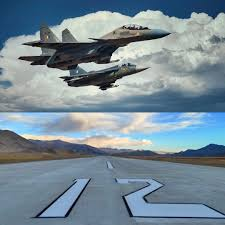
India has just taken a massive leap forward in securing its borders. The Mudh-Nyoma airbase in the high-altitude region of Ladakh, very close to the Line of Actual Control (LAC) with China, is now fully operational. This isn't just a new runway; it's a strategic game changer that significantly enhances India's ability to respond quickly and effectively to any situation on the border. The inauguration by Air Chief Marshal A. P. Singh marked a historic moment, signaling India's strong commitment to national security and preparedness in the challenging Himalayan terrain.
Why Nyoma Matters: Location, Location, Location
The first and most crucial point about Nyoma is its location. Situated in eastern Ladakh, the airbase is literally a stone's throw from the contested border with China. For years, the Indian military has relied on a network of existing airfields, some of which are a considerable distance from the LAC flashpoints. Nyoma drastically cuts down the time it takes for aircraft to reach the most critical sectors. This proximity means faster response times, which is vital in a high-stakes, high-altitude environment where even minutes can make a difference.
The Ladakh sector, especially the areas around Pangong Tso lake and Depsang Plains, has seen increased military activity and tension in recent years. By operationalizing Nyoma, India gains an echeloned forward base. This means that instead of launching missions from bases further back, assets can be positioned and launched from Nyoma, allowing them to carry heavier loads of fuel and weapons because they don't have to fly as far. This simple geographical fact translates into a massive increase in operational efficiency and punch.
Rapid Mobilization: The Backbone of Defense
The official statement about the airbase highlights its role in rapid troop and supply mobilization. This is the practical benefit that underpins the entire project. Think of a remote location where ground transportation can be slow, difficult, and vulnerable, especially during the harsh Himalayan winter when roads are often closed by heavy snowfall.
With Nyoma operational, large military transport aircraft can land and offload troops, equipment, and essential supplies directly into the heart of the operational area. This cuts out days of travel that would normally be required for a ground convoy. In a crisis, the ability to airlift a battalion of soldiers or a battery of artillery guns in hours, rather than days, is the definition of strategic advantage. It ensures that frontline troops are never short of what they need, whether it's ammunition, food, medical supplies, or reinforcements.
Furthermore, Nyoma's activation provides a crucial alternate landing ground. If the main airfields in the region are congested or temporarily unavailable due to weather or other issues, Nyoma offers a reliable backup. This redundancy is a key part of robust military planning and ensures continuity of operations under all circumstances.
A Boost for Combat Air Power
While the airbase will play a huge role in transport and logistics, its capability to support combat aircraft is what truly raises the stakes. Nyoma can be used as a forward staging post for fighter jets and attack helicopters. Imagine a scenario where fighter aircraft are operating from this base. They can spend more time over the target area because they don't need to dedicate as much fuel to the journey to and from a distant primary base. This allows them to carry a heavier weapons payload, significantly increasing their lethality and endurance during patrols or actual combat missions.
The capability is not limited to just fighters. It is also an ideal base for surveillance and reconnaissance aircraft. Drones and high-altitude surveillance planes can launch from Nyoma to monitor border areas more frequently and with greater detail. Better eyes in the sky lead to better intelligence, and better intelligence leads to better decision-making for the commanders on the ground. The ability to monitor troop movements on the other side of the border in near real-time is an invaluable deterrent.
Engineered for the Extremes: The Technical Challenge
Building and operationalizing an airbase at an altitude of over 13,000 feet (about 4,000 meters) is an engineering marvel. The climate in Ladakh is unforgiving. Temperatures plummet, oxygen levels are low, and the terrain is rocky and unpredictable. The construction team had to overcome massive logistical challenges just to get the heavy machinery and materials to the site. The successful completion of the Nyoma airbase underscores the determination and technical skill of the Border Roads Organisation (BRO) and the Indian Air Force (IAF) engineers involved in the project.
Special engineering is required to make a runway viable in such a cold climate. The ground freezes and thaws, which can destabilize traditional pavement. The Nyoma airbase has been built using advanced construction techniques suitable for permafrost and high altitude, ensuring the runway remains stable and safe for operations by a variety of large aircraft, from the C-130J Super Hercules transport plane to various fighter jets. This commitment to quality engineering ensures the airbase is not just a temporary solution but a permanent and reliable military asset.
A Clear Message of Deterrence
Beyond the practical military benefits, the operationalization of the Nyoma airbase sends a clear, unambiguous message to any potential adversary. It demonstrates India's resolve to defend every inch of its territory and its commitment to infrastructure development in the border areas. Infrastructure development, in this context, is a critical component of national defense. A nation that builds roads, bridges, and airfields in contested areas is a nation that intends to stay and defend that land.
In military and diplomatic circles, this is known as deterrence by capability. It means that a potential aggressor will think twice before attempting any hostile action because they know India has the ready infrastructure to immediately escalate its military response. The airbase stands as a powerful symbol of India's modernization drive for its armed forces and its long-term strategy for securing the Himalayan frontier. It shows that India is investing heavily and purposefully in strengthening its defense posture along the entire length of the LAC.
The Nyoma airbase is more than just concrete and tarmac. It is a vital artery for the troops guarding the nation, a forward shield for the country, and a proud testament to India's growing capacity to project and sustain air power in the most challenging environments on Earth. It firmly places India in a position of enhanced strength and readiness in the high mountains of Ladakh.
Beyond the Military: A Civilian Lifeline
While the primary function is military, the Nyoma airbase has the potential to act as a lifeline for the remote civilian population of eastern Ladakh. In a true emergency, such as a major natural disaster, the operational airbase could be rapidly used for humanitarian assistance and disaster relief (HADR) missions. It could be instrumental in airlifting injured civilians or bringing in emergency medical teams and supplies when road access is impossible due to landslides or heavy snow.
This dual-use potential is a common feature of strategic infrastructure in difficult regions. By supporting the military's needs, the infrastructure also indirectly benefits the local population, contributing to a sense of security and connectivity that is often lacking in these far-flung regions. The airbase, therefore, contributes not only to national security but also to regional development and resilience.
Looking Ahead: Securing the Future
The Nyoma airbase is now a permanent fixture in India’s defense architecture. Its operational status marks the beginning of a new phase in securing the northern borders. The air force will now be able to conduct regular exercises and familiarize sorties from the base, ensuring that pilots and ground crews are fully acclimatized and proficient in operating from this challenging location. This continuous training is essential for maintaining a high state of readiness.
The activation of Nyoma is part of a larger, ongoing effort to upgrade military infrastructure all along the LAC. It is a sign that India is moving away from a purely reactive defense posture to one that is proactive, well-equipped, and permanently ready. The strategic value of this airbase cannot be overstated; it is a powerful guarantor of peace and stability in a highly sensitive border region. Nyoma is not just a strategic asset for today, but a foundational pillar for tomorrow's security challenges. The nation watches with pride and confidence as this new high-altitude base takes its place in the sky, ready to serve the nation.


Comments