Huge Cache Of Explosives Seized In Rajasthan On Republic Day Eve
- Anjali Regmi
- Jan 26
- 5 min read

Security is something we often take for granted until we hear news that makes us pause and think about what goes on behind the scenes. On the eve of Republic Day, while most of the country was preparing for celebrations and parades, a major operation was unfolding in the quiet corners of Rajasthan. The state police managed to intercept a massive consignment of explosives that could have caused unimaginable damage. This was not just a small bag or a few stray items; we are talking about nearly 10,000 kilograms of explosive material, along with a large number of detonators and fuse wires.
The recovery took place in the Nagaur district of Rajasthan. It serves as a stark reminder of the constant vigilance required by our law enforcement agencies, especially during high profile national events. When the rest of the nation looks toward New Delhi for the grand festivities, the police in various states are often on their highest alert to ensure that the peace remains undisturbed. This particular seizure is being hailed as one of the biggest in the state’s history, and for good reason.
The Raid At The Farmhouse
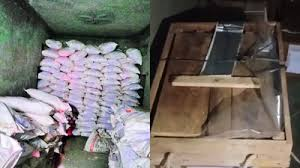
The operation was not a random check but a result of precise intelligence and careful planning. Acting on a tip-off, a joint team from the District Special Team and the local Thanwala police station converged on a farmhouse in Harsaur village. This farmhouse was located in a somewhat secluded area, built on agricultural land, making it an ideal spot for someone trying to hide something away from the public eye.
When the police moved in late Saturday night, they discovered a scene that was far more serious than a simple case of illegal storage. Inside the farmhouse, they found 187 sacks filled with ammonium nitrate. The total weight of these sacks alone came to about 9,550 kilograms. But the ammonium nitrate was just the beginning. The police also found nine cartons of detonators and dozens of bundles of fuse wires in both blue and red colors.
The scale of this storage was staggering. It wasn’t just tucked away in a corner; the materials were spread across four separate rooms. It looked less like a farm shed and more like a high-capacity warehouse for dangerous goods. Seeing such a volume of explosives in one place is enough to send a shiver down anyone's spine, especially given the timing.
Who Was Behind This
The man at the center of this investigation is Suleman Khan, a 58-year-old resident of the same village. He was arrested on the spot during the raid. Interestingly, this was not his first brush with the law. Police records indicate that he has a history of involvement in similar activities, with at least three previous cases registered against him under the Explosives Act.
While he has been acquitted in one of those past cases, his recurring name in police files suggests a long-standing connection to the illegal trade of blasting materials. During the initial rounds of questioning, the suspect claimed that the materials were intended for use in mining activities. Rajasthan is a state known for its vast mining industry, and explosives are frequently used for breaking rock and extracting minerals. However, the sheer quantity he was holding was far beyond what any standard individual or small-scale operation would reasonably need.
The Mining Link And The Bigger Picture
The police are currently looking into the "illegal mining" angle very closely. It is a known issue in parts of Rajasthan where unlicensed mining operators bypass safety regulations and environmental laws. To do this, they need a steady supply of cheap, unregulated explosives. Suleman Khan allegedly acted as a middleman or a supplier for these groups.
But there is a darker side to this story that the authorities cannot ignore. Ammonium nitrate is a "dual-use" substance. While it is widely used in fertilizers and industrial mining, it has also been the primary ingredient in many improvised explosive devices used in terror attacks across the globe. Because of this, its sale and storage are strictly regulated by the government.
The fact that such a massive amount was being stored illegally, just hours before Republic Day, has naturally raised red flags among national security agencies. Even if the primary intent was for mining, having 10 tons of explosives sitting in an unsecured farmhouse is a massive public safety hazard. If that much material had been ignited by accident or stolen by even more dangerous elements, the consequences would have been catastrophic.
Why The Timing Matters
Republic Day is one of the most sensitive times of the year for Indian security forces. Intelligence agencies often issue alerts during this period because it is a high-value window for anyone looking to cause disruption. Just a few months prior, in late 2025, a blast near Delhi's Red Fort had already put the entire country on edge. Knowing that ammonium nitrate was involved in that incident makes this seizure in Rajasthan even more significant.
The Nagaur Superintendent of Police emphasized that this was likely the largest operation under the Explosives Act that the state has seen. Because of the sensitivity and the volume of the haul, central intelligence agencies have been looped into the investigation. They want to know exactly where this material came from. A consignment of 10,000 kilograms doesn’t just appear out of thin air; it has a supply chain, a manufacturer, and a series of transporters.
The Dangers Of Illegal Storage
Beyond the threat of a deliberate attack, the physical danger of storing this much ammonium nitrate cannot be overstated. We have seen historical examples where improper storage of this chemical led to massive accidental explosions that leveled entire neighborhoods. Storing it in a farmhouse, likely without any fire safety measures or temperature controls, was a recipe for disaster.
The local community in Harsaur village was reportedly shocked to learn what was being kept right under their noses. For them, it was just another farmhouse on a patch of agricultural land. They had no idea they were living next to a ticking time bomb of such magnitude.
What Happens Next
The investigation is far from over. Suleman Khan is being interrogated to find out who his buyers were and where he sourced the 187 sacks of chemicals. The police are trying to trace the entire network to see if other similar "warehouses" exist in other districts. In a separate incident around the same time, police in Tonk district also seized a smaller quantity of explosives, suggesting that there might be a wider crackdown on the movement of these materials.
For now, the successful raid has undoubtedly prevented a potential tragedy. Whether the explosives were meant for the mining mafia or something more sinister, the fact remains that 10,000 kilograms of dangerous material is now off the streets and in safe hands.
It is a victory for the local police and a reminder that security is a 24/7 job. While we enjoy the holiday and watch the parades, there are thousands of officers working through the night, following leads, and conducting raids to make sure the celebrations go off without a hitch. This seizure is a testament to their hard work and the importance of timely intelligence.


Comments