India and Bangladesh: A New Chapter Begins as Modi Reaches Out to Tarique Rahman
- Anjali Regmi
- 16 hours ago
- 5 min read

The political landscape of South Asia shifted significantly this week. For the first time in nearly two decades, Bangladesh has seen a monumental change in leadership through the ballot box. Following the historic February 2026 general elections, the Bangladesh Nationalist Party (BNP) has secured a landslide victory, marking the end of an era and the beginning of a complex new relationship with its largest neighbor, India.
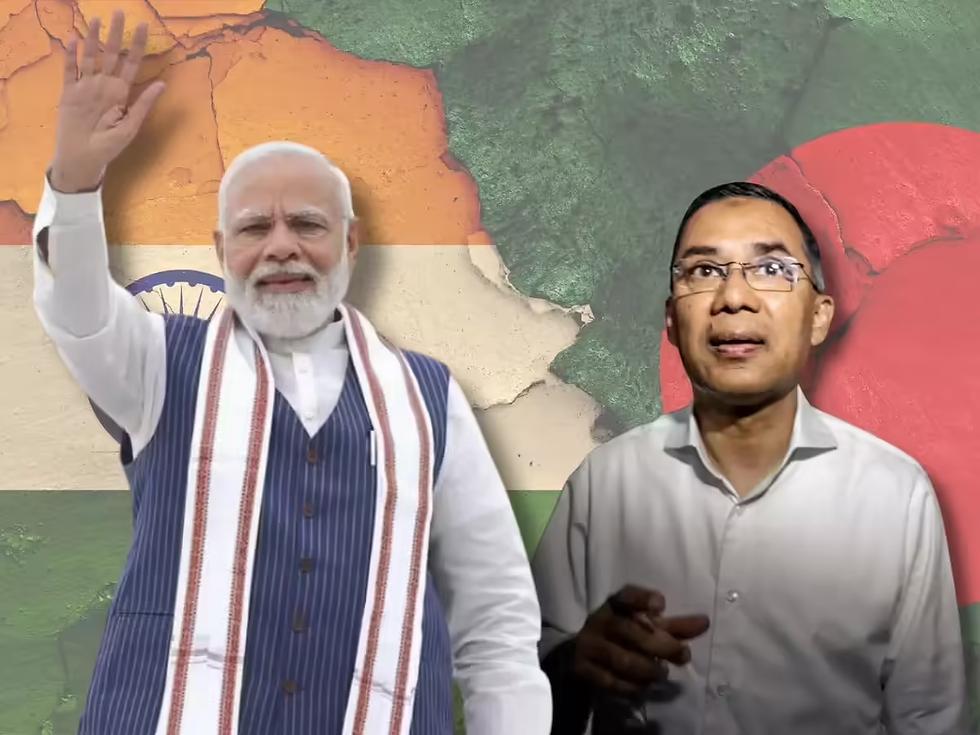
In a move that signals pragmatic diplomacy, Indian Prime Minister Narendra Modi was among the first global leaders to reach out to the BNP’s top leader, Tarique Rahman. This phone call is more than just a formal congratulation; it is a calculated step by New Delhi to reset a relationship that has been under immense strain since the fall of the Sheikh Hasina government in 2024.
The Decisive Verdict of the People
The 2026 elections were unlike any other in the history of Bangladesh. After months of being managed by an interim government led by Nobel laureate Muhammad Yunus, the country finally went to the polls. The results were clear: the BNP won over 200 seats in the 300-member parliament, giving them a commanding two-thirds majority.
This victory is particularly striking because the Awami League, the party that ruled for 15 consecutive years under Sheikh Hasina, did not participate. The party was largely disbanded following the violent uprising in August 2024. This left a vacuum that the BNP, led by Tarique Rahman from his years in exile, was more than ready to fill.
For the youth of Bangladesh, often called the "Gen Z voters," this election represented a chance to move past the old rivalries. However, the outcome shows that the BNP remains the most formidable organized political force in the country. With this mandate, Tarique Rahman is now set to become the next Prime Minister, returning to a country he left 17 years ago.
Prime Minister Modi’s Strategic Outreach
On February 13, Prime Minister Narendra Modi dialed Tarique Rahman to extend his best wishes. In his public statement, Modi emphasized the "deep-rooted historical and cultural ties" between the two nations. He reaffirmed India's commitment to the peace and progress of both peoples.
This call is a significant pivot for Indian foreign policy. For over a decade, New Delhi had a very close and exclusive working relationship with Sheikh Hasina. When she was ousted and fled to India, many in Bangladesh viewed India’s support for her as an interference in their domestic politics. This led to a surge in anti-India sentiment across the country.
By reaching out to Tarique Rahman immediately after the results, Modi is sending a clear message: India is ready to work with whoever the people of Bangladesh choose. It is an effort to move past the "Golden Chapter" of the Hasina years and build what some diplomats are now calling a "Silver Chapter" based on mutual respect and shared economic interests.
The Challenges of a New Partnership
While the initial phone call was warm, the road ahead is filled with obstacles. The relationship between the BNP and India has historically been rocky. During the BNP's previous tenure from 2001 to 2006, India frequently raised concerns about security issues, specifically the presence of insurgent groups from Northeast India operating out of Bangladeshi soil.
Tarique Rahman himself has had a complicated history with India. However, during his time in London and since his return, he has made efforts to project a more moderate and centrist image. He has spoken about a "Bangladesh First" doctrine, which focuses on economic recovery and the rule of law.
One of the most immediate points of friction will be the status of Sheikh Hasina. The BNP has already renewed demands for her extradition from India to face trial in Dhaka for crimes committed during her regime. This puts New Delhi in a tough spot. Handing her over would be seen as a betrayal of a long-time ally, but refusing to do so could further inflame anti-India feelings among the Bangladeshi public.
Security and Regional Stability
India’s primary concern has always been the security of its "Chicken's Neck" corridor and the stability of its northeastern states. Under Hasina, these concerns were largely addressed. With a new government in Dhaka, India will be looking for reassurances that Bangladesh will not become a safe haven for extremist elements.
The 2026 election also saw the Jamaat-e-Islami emerge as the second-largest party, winning 68 seats. While they will be in the opposition, their influence in the streets and on the social fabric of the country remains strong. India remains wary of radical ideologies that could potentially spill over the 4,000-kilometer shared border.
Conversely, the BNP knows that it needs India for economic stability. Bangladesh is India's largest trading partner in South Asia, and the two countries share vital links in energy, transit, and water sharing. For Tarique Rahman to fulfill his promise of fixing the economy and bringing financial discipline, a working relationship with New Delhi is not just an option—it is a necessity.
The Role of the Youth and Reform
This election was also a referendum on the "July Charter," a set of 84-point reforms proposed by the interim government to overhaul the country’s institutions. Over 68% of voters backed these reforms in a parallel referendum held alongside the general election.
The new government will be under immense pressure to deliver on these reforms. The people are no longer willing to accept the corruption and authoritarianism of the past. If the BNP fails to provide transparency and justice, the same youth energy that toppled the previous regime could easily turn against them.
For India, this means engaging not just with the political elite in Dhaka, but with the broader civil society and the younger generation. The old "pro-India" vs "anti-India" binary is fading, replaced by a generation that cares more about jobs, digital rights, and national sovereignty.
A Shift in the Geopolitical Balance
The change in Dhaka also has wider regional implications. During the interim period, Bangladesh significantly warmed its ties with Pakistan and China. We saw the establishment of direct sea links with Karachi and discussions on deepening defense cooperation with Islamabad.
India is watching these developments closely. While Bangladesh’s right to an independent foreign policy is acknowledged, New Delhi is keen to ensure that Dhaka does not drift too far into the orbit of regional rivals. The outreach by Modi is an attempt to ensure that India remains a primary partner in Bangladesh’s development journey.
Tarique Rahman has indicated that he wants to maintain a balance. He has stated that while the people's sentiment must be respected, the structural logic for cooperation with India—geography, trade, and shared rivers—remains unchanged.
Looking Toward the Future
The phone call between Modi and Rahman is a starting point, but the real work begins now. In the coming months, we can expect high-level visits and a series of "goodwill gestures" from both sides. India might look to ease visa restrictions or offer new credit lines for infrastructure, while the BNP government will need to show that it can protect minorities and maintain a peaceful border.
The "Silver Chapter" of India-Bangladesh relations will likely be more transactional and less emotional than the previous decade. It will be a relationship based on hard interests rather than personal friendships between leaders.
As Bangladesh steps into this new era, the world is watching. Will the return of the BNP lead to a more democratic and inclusive nation, or will the ghosts of the past resurface? For now, the focus is on stability. By dialing Tarique Rahman, Prime Minister Modi has signaled that India is ready to walk this new path alongside its neighbor, cautiously but with a spirit of cooperation.
The success of this transition will define the stability of South Asia for years to come. Both New Delhi and Dhaka have a massive stake in ensuring that this new chapter leads to prosperity rather than conflict.


Comments