NCERT Introduces Major Changes in Class 7 Mathematics Textbook for 2025 to 2026
- Anjali Regmi
- Dec 1, 2025
- 4 min read

Introduction
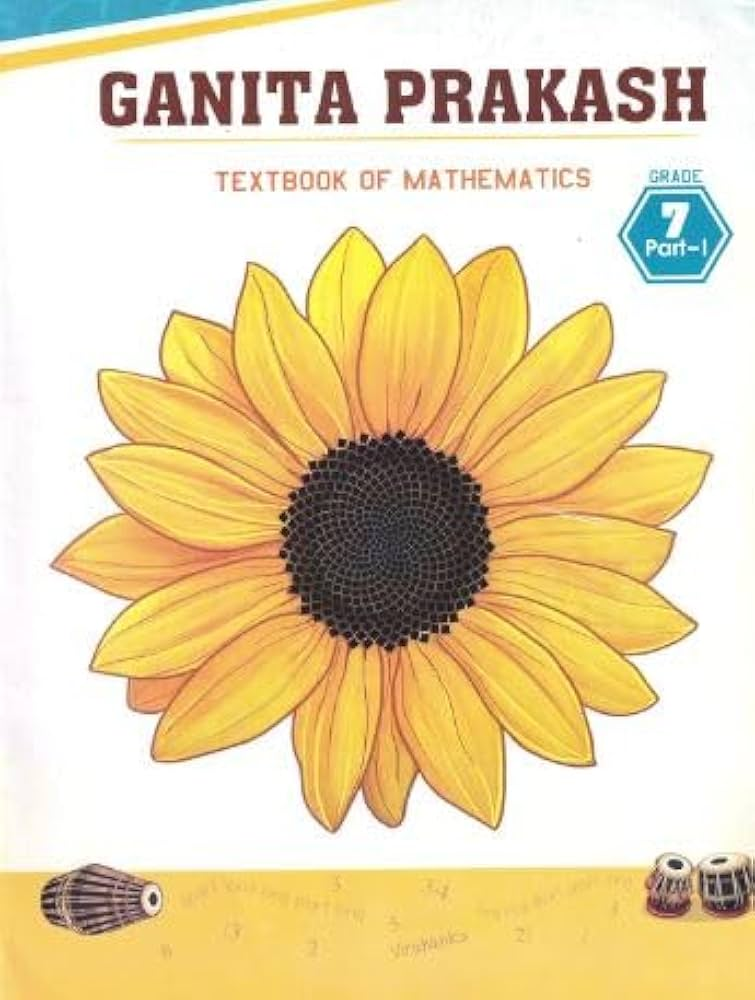
The new session of 2025 to 2026 brings a major shift in the Class 7 mathematics textbook. The updated book aims to make learning easier, more meaningful, and closely connected to India’s long mathematical heritage. The revised edition, often called Ganita Prakash, takes a fresh approach by blending modern ideas with ancient knowledge in a smooth and friendly way. Students will now learn concepts not only through formulas but also through stories, puzzles, pictures, and real world objects. The goal is to show that mathematics is not a difficult subject but a part of daily life that helps us think clearly and solve problems with confidence. This updated book follows the new national guidelines that focus on joyful learning.
A New View of Mathematics
The biggest change in the new textbook is the shift from memorising to understanding. Earlier, many students felt that mathematics was full of rules that had to be remembered. Now the focus is on seeing patterns, asking questions, and using imagination. Every chapter begins with an activity or puzzle that encourages students to think for themselves. The lessons use colourful illustrations, relatable situations, and simple language that supports children who may find mathematics challenging. By taking away fear and adding curiosity, the book hopes to build confidence in young learners.
Connection to Ancient Knowledge
One of the most exciting features of the revised book is its deep connection with old Indian mathematical ideas. These ideas were important for building temples, designing astronomy tools, and solving trade problems many centuries ago. The updated textbook introduces these contributions in a simple manner so that students learn the history behind what they study. There are references to early algebraic ideas like bijaganita, which introduced ways to work with unknown quantities. Students will see how symbols used in modern mathematics have roots in ancient thinking. The chapter notes explain how early scholars used logical steps while solving problems, proving that the love for reasoning and calculation has been part of Indian culture for a long time.
Highlight on Ancient Texts
The new textbook also mentions well known ancient works. One of them is Brahmasphutasiddhanta, a text that explained early principles of arithmetic and algebra. Instead of discussing these works in a heavy or academic way, the book uses simple stories and examples to show how valuable they were. Children get to see how ideas developed over the years and how scholars of the past shaped many methods used today. This connection helps students understand that the subject did not appear suddenly but grew from thousands of years of observation, discussion, and creative problem solving.
Creative Tools for Better Learning
To make learning enjoyable, the new textbook uses creative tools on almost every page. Puzzles introduce new topics. Pattern spotting activities help students recognise connections between numbers and shapes. Real life examples using ropes and rope based structures show how algebra and geometry work outside the classroom. These ideas make mathematics look less abstract and more like a set of skills that anyone can apply. The activities are simple enough for children to try at home or school with everyday objects. This practical approach helps students learn through doing, which is often more effective than only reading or listening.
Hands on Geometry
Geometry has received special attention in the revised textbook. The new chapter called Construction and Tilings is inspired by ancient methods described in Sulba Sutras. These texts provided rules for building fire altars using ropes and straight lines. The updated book uses similar rope based methods to show how to form perpendicular bisectors, parallel lines, and simple shapes. Instead of depending only on a ruler and compass, students learn to use ropes, sticks, and tiles. This makes the subject engaging and also shows how mathematics can be found in the physical world. The hands on style helps children understand why geometric rules work instead of just remembering them.
Encouraging Logical Thinking
The revised textbook is carefully designed to encourage logical and step by step thinking. Each chapter contains small reasoning tasks that allow students to check their own ideas. For example, after learning about patterns, children solve short problems that build the habit of observing before answering. After learning about shapes, they work with tiling patterns that require careful planning. These short but meaningful activities help develop problem solving skills. Over time, students start believing that they can find solutions on their own. This confidence is an important goal of the new book.
Real Life Connection
Mathematics becomes interesting when it is connected to real life. The updated textbook includes examples from daily experiences such as sharing items, measuring distances, arranging objects, and recognising patterns in nature. When children start seeing mathematics in things around them, learning stops feeling like a burden. The revised book tries to make every concept useful rather than theoretical. Students learn how mathematics helps in activities like designing rangoli, understanding maps, planning games, and making simple household calculations. This approach helps students learn both the subject and the world around them.
Support for Different Learners
Another important feature is that the book supports students with different learning speeds. Activities are short, clear, and friendly. Illustrations guide students who understand visually. Word problems help those who learn through stories. Practice exercises provide enough variety for children who need extra time. The aim is to make sure that no child feels left behind. Teachers also get notes and tips to support children who may need additional help. The revised textbook respects every student’s learning style.
A Step Toward Modern Education
The updated textbook matches the direction of modern education in India. It values creativity, cultural knowledge, and practical learning. By bringing old and new ideas together, the book shows that mathematics is both timeless and modern. Students learn to appreciate their heritage while building skills needed for future studies. This balanced approach prepares children for higher classes while keeping them interested in the subject.
Conclusion
The 2025 to 2026 version of the Class 7 mathematics textbook marks a fresh beginning. With puzzles, stories, ancient ideas, and real life activities, it has turned mathematics into a friendly subject. The book encourages thinking, creativity, and confidence. By connecting the wisdom of the past with the needs of today, the revised textbook creates a learning experience that is meaningful and enjoyable. It shows that mathematics is not just about numbers but about understanding the world with clarity and wonder.


Comments